
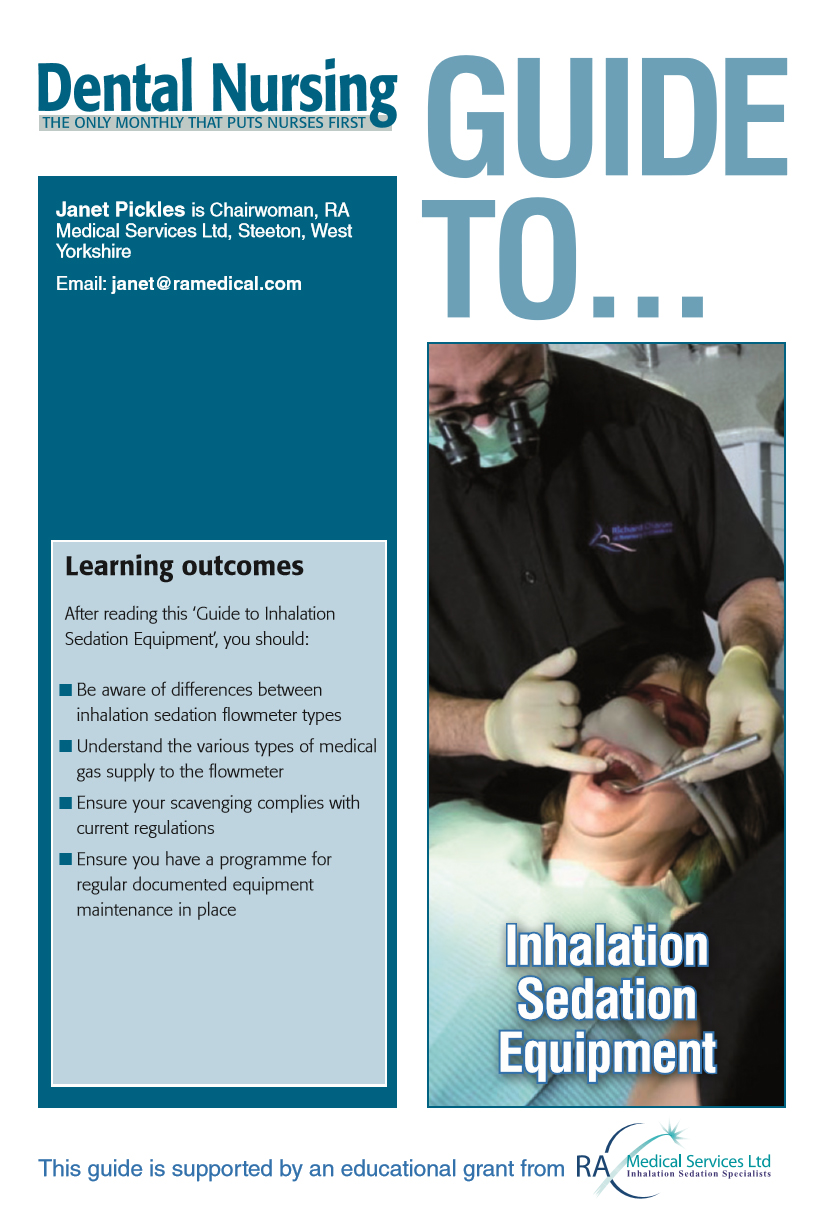
This guide describes the use of inhalation sedation equipment, looking at the three core elements: the flowmeter, the scavenging system, and the medical gas supply. It is intended for the whole dental team — to help you understand what the equipment does, how it should be specified for a new surgery, and what your maintenance programme should look like.
What you'll learn
- Be aware of the differences between the main inhalation sedation flowmeter types.
- Understand the various types of medical gas supply to the flowmeter.
- Ensure your scavenging complies with current regulations.
- Ensure you have a programme for regular documented equipment maintenance.
There are currently approximately seven main types of dedicated inhalation sedation flowmeter in circulation on the UK and Irish market. These include:
- MDM (Cyprane, Fraser Sweatman, Matrx) — the traditional analogue flowmeter. Workhorse of UK dental sedation.
- Digital MDM (Matrx) — same physical design as the analogue MDM, with an electronic flow display.
- MXR (Porter) — a continuous-flow flowmeter common in the US, also sold in the UK.
- Quantiflex Mark II (Cyprane, Fraser Sweatman) — older analogue design, declining in use.
- Ultra and Newport (Accutron) — Accutron Newport is floor-standing.
- Mc1 (McKesson) — older design.
- Quantiflex Mark I (Cyprane) — older still, rare now.
All these units require some form of mounting to hold them at the correct operating angle, with the exception of the Accutron Newport which is floor-standing.

Flowmeters can be supplied with gas from:
- Cylinders on a four-cylinder stand — the traditional setup. Two oxygen and two nitrous oxide cylinders, with automatic changeover when one pair runs low. Still common in practices that want independence from the pipeline.
- Piped medical gas — oxygen and nitrous oxide delivered through a dedicated pipeline from a central bank. Requires a pipeline system installed to HTM 02-01.
For new-build practices, piped gas is increasingly the standard. For existing practices, a four-cylinder stand remains a reliable, lower-capital-cost option.
When specifying a pipeline, work with an HTM 02-01-compliant installer. R A Medical can advise on pipeline sizing and terminal placement — call Janet on 01535 652 444.
A scavenging system that delivers 45 L/min at the nasal mask is the standard. The three methods are:
- Connection to a high-volume dental vacuum (subject to it being externally vented).
- Connection to a centralised AGS system with no air break in-line.
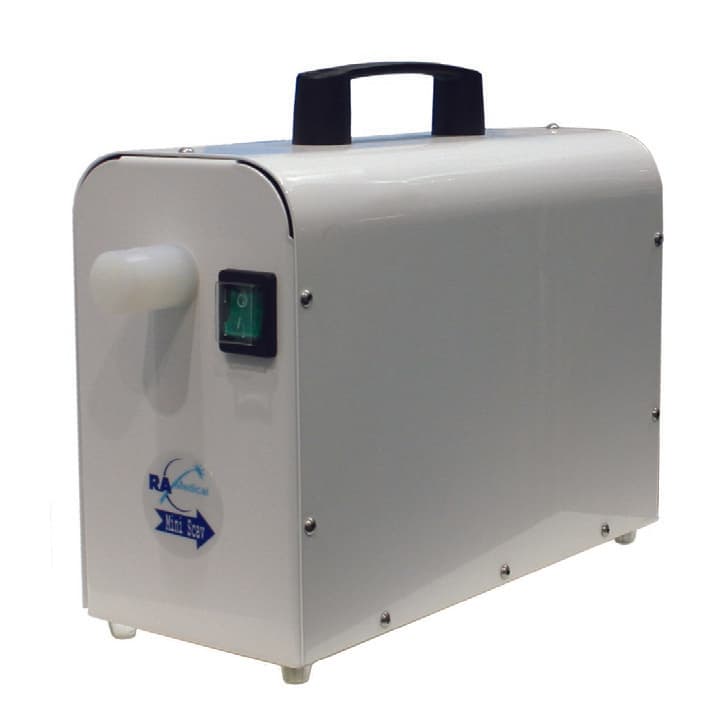
- Connection to a Miniscav standalone unit.
For most practices, a Miniscav is the simplest, most reliable option. It is independent of the surgery vacuum, delivers a consistent 45 L/min, and works with any standard breathing system.
Make sure your scavenging system is included in your annual equipment service. R A Medical services Miniscavs and most other makes.

Your equipment maintenance programme should include:
- Pre-use checks — every day, by the clinician or nurse using the equipment. Documented on a checklist.
- Quarterly checks — by a designated team member. Includes visual inspection of the breathing system, the reservoir bag, and the pipeline connections.
- Annual service — by a trained engineer. R A Medical offers both on-site engineer visits and a postal service (3-day turnaround). All work is to OEM specification using genuine parts.
- 6-year regulator and hose replacement — per MHRA guidance and manufacturer recommendation.
- Decontamination log — every cycle documented.
A well-maintained flowmeter will give 15–20 years of service. A neglected one fails prematurely and expensively.
Key takeaways
- There are seven main flowmeter types in UK practice. The MDM (Cyprane/Matrx) is the workhorse; the MXR, Digital Ultra, Ultra PC and Midas are also common.
- Scavenging at 45 L/min at the nasal mask is the standard. A Miniscav is the simplest way to achieve it.
- A good maintenance programme extends equipment life: pre-use checks, quarterly visual inspections, annual engineer service, and 6-year regulator replacement.
References
- Department of Health (2006). Medical Gas Pipeline Systems. HTM 02-01. DH, London.
- Medicines and Healthcare products Regulatory Agency. Medical device alerts.
Originally developed as a sponsored educational supplement in Dental Nursing magazine. Re-published by R A Medical Services Ltd with all third-party branding removed.


